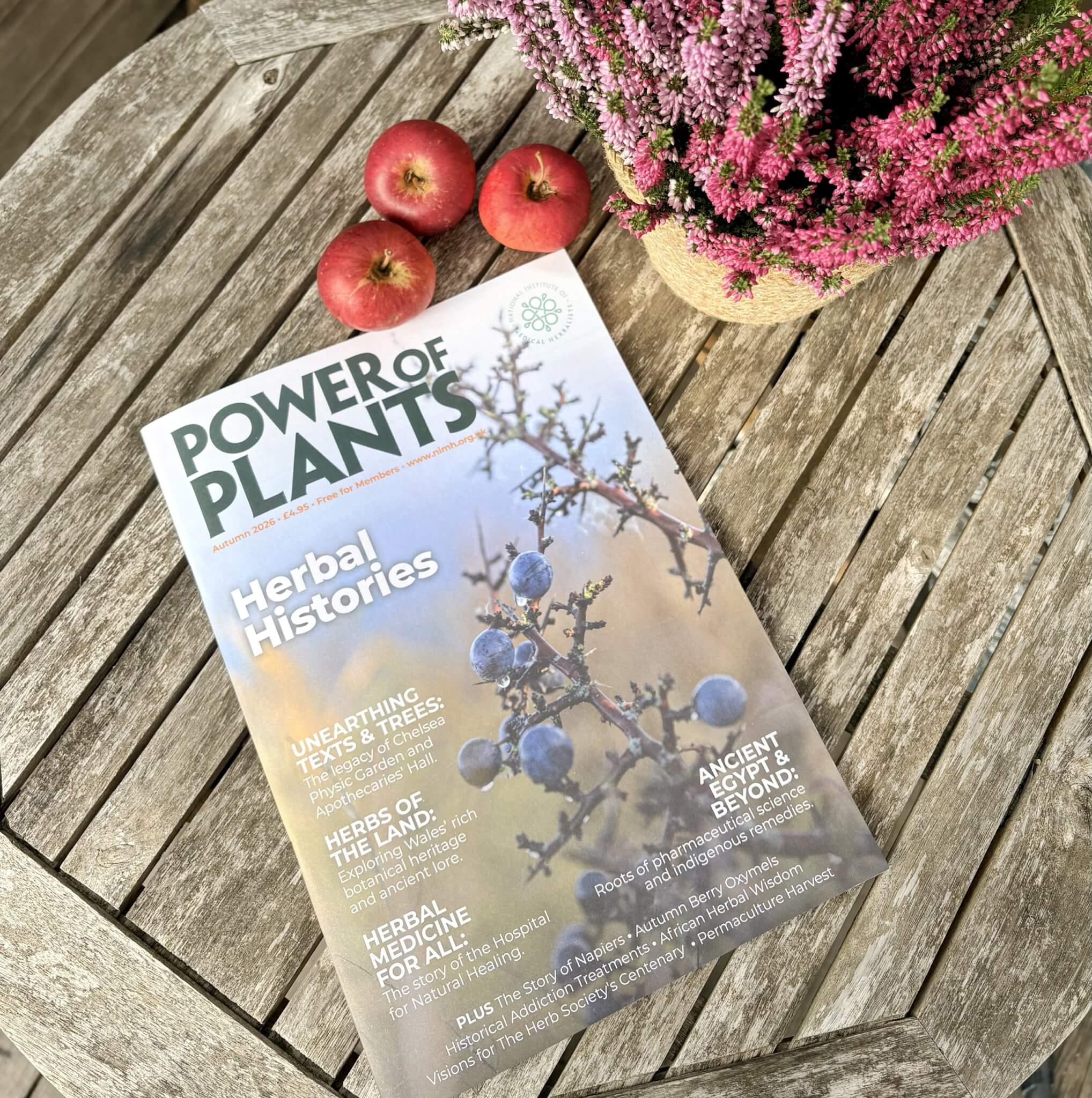
Autumn 2026 Edition of Power of Plants Magazine
The Autumn edition of Power of Plants magazine is out now! 🍃
This edition brings together a fascinating collection of articles exploring herbal medicine, its history, traditions and future, celebrating the many ways plants, practitioners and people connect.
Inside this edition:
Each edition features articles, opinions, research and updates from across the world of herbal medicine, showcasing the diverse ways plants support health and wellbeing.
How to access the magazine
Full Members of the National Institute of Medical Herbalists (NIMH) can receive a complimentary copy of the magazine by opting in to receive it.
Not a member? You can purchase individual issues or subscribe to Power of Plants through our website shop.
Read extracts from From Garden to Dispensary: Berries by Suzann Elsahen 🌿
I am in Poland on holiday, on the Hel peninsula, in a lovely little town called Kuznica. It is one of those places where in five minutes I can walk from the gulf side to the open sea. There is a long bike road here, and between the road and the gulf there are rose bushes. Literally the whole road (more than 40km) of roses. There are a few rose flowers remaining, but mostly bright, red rosehips everywhere. These are the common dog rose, Rosa canina.
I went out to collect some, of course, but the rosehips had guardians. Huge spider webs were stretched between the rose bushes, with quite big and quite scary spiders sitting in the middle of them. I do not mind spiders in theory, as I believe that spiders bring luck, but when foraging I prefer them at a distance. Unfortunately, they were there first, so I left those rosehips alone and collected only from the places that were not protected.
I collected about half of a three-litre jar and filled it with organic apple cider vinegar. I am going to leave it for about six weeks, then strain it and turn it into an oxymel with honey. I love oxymels because they are practical. You get the sharpness of vinegar and the softness of honey together.
Rosehips are famous for vitamin C, but of course there is more. The red colour tells us that they have carotenoids, flavonoids, fruit acids and other antioxidant compounds. In modern herbal practice, rosehip is often thought of as a sour, nutritive, antioxidant-rich fruit, useful in autumn and winter.
The other berry that feels completely Polish to me is the forest blueberry. In Polish we call them jagody, and they are the small dark berries that stain everything. They are not the large American blueberries from the supermarket, but bilberries, Vaccinium myrtillus: smaller, darker, sharper and much tastier.
They grow in the forests here, and collecting them is part food gathering and childhood memory. You think you have collected loads, then you look in the jar and realise you have barely covered the bottom. We have been collecting them ourselves, but locals also collect them and sell them very affordably in jars. I believe in supporting the local economy, so we eat what we collect for fun, and I may buy more to freeze and take home.
At the moment, the best way to eat them is very simple. A bowl of bilberries with a bit of yoghurt on top; this reminds me of my childhood.
Medicinally, bilberries are interesting because of that deep blue-black colour. Traditionally they have been used for the eyes, circulation and the gut. I was thinking about making a tincture, but a syrup feels better this time. A bilberry syrup could go on yoghurt, into porridge, into warm water, or just be taken from a spoon.
Then there is hawthorn. Back in the UK, this is the time that I start watching the hawthorn berries. Hawthorn tincture is something I tend to add if I find there is space in the bottle. The berries are not the most exciting thing to process as they are small, firm and a bit fiddly, but I still like making hawthorn tincture. I like to show dry hawthorn berries to people who visit my market stalls. Have a look at a dry hawthorn berry through a magnifying glass. It looks so different from the lovely silky fresh berry. It has pores all over and a little crown on top where the flower used to be.
There was one more little plant excitement on this trip, although it is not a berry. I was lucky enough to find some Ephedra seeds. They need to be planted in September, so this will be my first proper experiment with planting Ephedra from seed. As we all know, Ephedra has disappeared from our suppliers and that is very unfortunate. A friend told me she was advised to use Luffa, and it seems to work great. However, I thought I’ll give Ephedra a try. Maybe if we grow our own supplies, we’ll keep Ephedra on our shelves.
For now, I am still in Kuznica, still walking between the gulf and the sea, still spotting rosehips everywhere, still coming back with bilberry-stained fingers. What a lovely way to end this hot summer, before starting work on autumn tasks.
Read the full article in the Autumn 2026 magazine